4 Real Reasons Dogs Eat Grass, and Most Aren't Sick
The idea that dogs eat grass because they feel sick doesn't hold up. In a survey of 1,571 dogs, only 22% often vomited afterward.
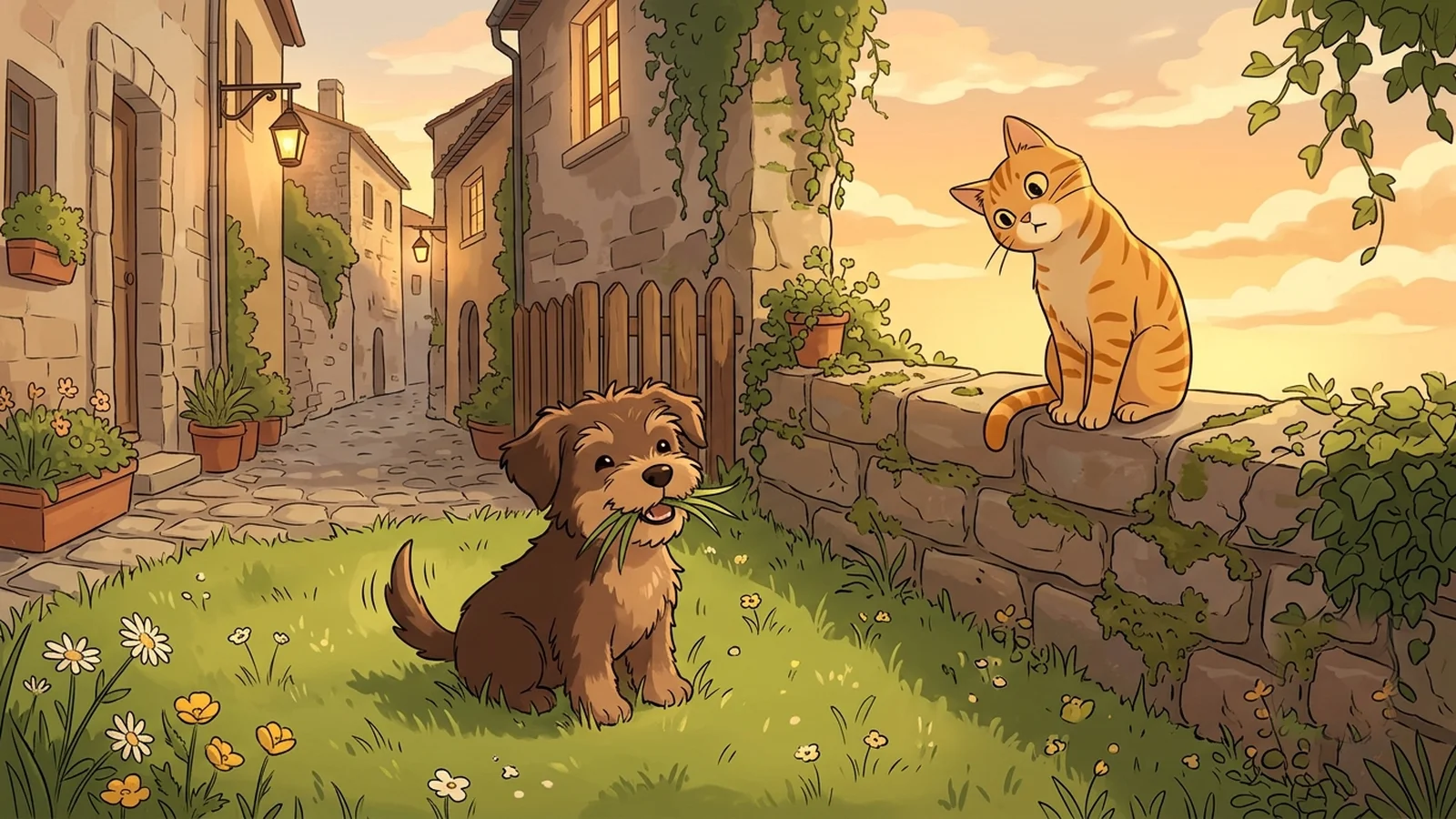
When a dog starts chewing grass on a walk, most owners assume an upset stomach. The research says otherwise. In a UC Davis study of 1,571 plant-eating dogs, only 9% often looked ill before eating plants and only 22% often vomited afterward. The researchers concluded that plant eating is normal dog behavior. Here's why dogs do it and when to worry, based on veterinary sources.
What the research says about dogs eating grass
The study most often cited is by Sueda, Hart, and Cliff, published in Applied Animal Behaviour Science (volume 111, 2008). Co-author Benjamin L. Hart is a veterinary behaviorist at the UC Davis School of Veterinary Medicine.
It had two parts. First, the team surveyed owners bringing healthy dogs to a university veterinary hospital. Of 47 owners whose dogs had daily access to plants, 79% said they had seen their dog eat grass or other plants. Next, an online survey aimed at owners of plant-eating dogs drew 3,340 responses, of which 1,571 met the study's criteria.
| Item | Result |
|---|---|
| Dogs analyzed | 1,571 plant-eating dogs (from 3,340 surveys) |
| Eat plants daily or weekly | 68% |
| Grass is the plant eaten most often | 79% |
| Often look ill before eating plants | 9% |
| Often vomit afterward | 22% |
| Sex, neuter status, breed group, diet type | No link found |
| Age | Younger dogs ate plants more often and vomited less |
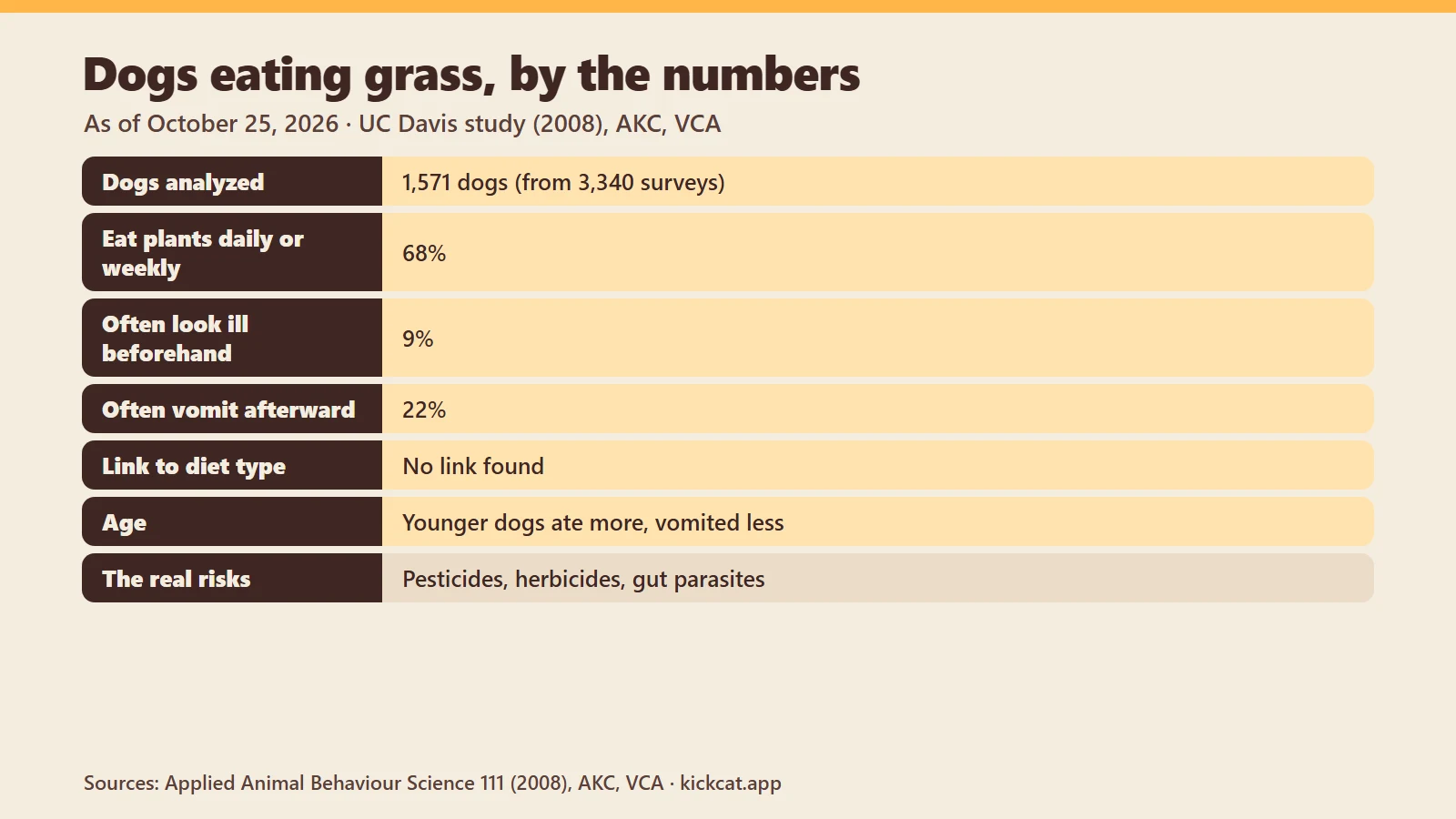
The age finding is telling. Younger dogs ate plants more often and ate more non-grass plants, yet they were less likely to look ill beforehand or to vomit afterward. That's hard to square with the idea that dogs eat grass because they feel sick.
The 4 real reasons dogs eat grass
No single cause has been confirmed. Here are the explanations that research and veterinary organizations point to.
1. Instinct inherited from wild ancestors
Hart sees plant eating as an instinct passed down from wild canid ancestors. Earlier studies summarized in his paper found plant material in wolf scats and stomach contents: about 11% of samples from Latvian wolves and about 74% of summer samples from wolves in Yellowstone National Park. Hart has also proposed that plant material moving through the gut may have helped wild ancestors purge intestinal worms by wrapping around them. He notes that more studies are needed.
2. Taste and texture
The American Kennel Club's guide, which quotes AKC Chief Veterinary Officer Dr. Jerry Klein and was updated April 30, 2026, says some dogs may simply like how grass tastes and feels, especially fresh new growth in spring. Some dogs also eat grass when they're thirsty.
3. Boredom or anxiety
A dog left alone in a yard for long stretches may chew grass for something to do. Veterinarians writing for VCA Animal Hospitals add attention-seeking and anxiety to the list, describing grass chewing as a possible comfort behavior.
4. Digestion and an empty stomach
Grass is a source of fiber, and some vets suggest dogs may graze to help digestion and bowel movements. The AKC also says some dogs may eat grass to bring up bile, which can happen on an empty stomach. Still, the 2008 study found no link between diet type and plant eating, so the idea that dogs eat grass to make up for a poor diet has weak support. VCA likewise notes that fewer than 25% of dogs vomit after eating grass, which undercuts the belief that they eat it to settle their stomachs.
Risks that matter more than the grass
What's on the grass is usually the bigger problem. The AKC and VCA both point to these:
- Pesticides and herbicides: Treated lawns can be toxic to dogs. If you don't know whether a lawn has been treated, it's safer to steer your dog away.
- Intestinal parasites: Grass contaminated by other animals' droppings can carry roundworms and hookworms, which is why vets may run a fecal test.
- Toxic plants: The AKC warns that chewing or swallowing certain houseplants can cause poisoning. Check the plants indoors, not just the lawn.
When to see a vet, and how to cut back
The AKC recommends talking to your veterinarian if:
- Your dog vomits frequently after eating grass
- Grass eating suddenly increases or becomes excessive
- It comes with diarrhea, weight loss, decreased appetite, bloody stool, lethargy, or lip licking
VCA notes that signs of stomach discomfort can point to conditions such as gastric reflux, inflammatory bowel disease, or pancreatitis, so get those checked. This article is general information and is not a substitute for a veterinarian's diagnosis.
If you want to reduce grass eating, the AKC's suggestions are a good starting point. Feed smaller, more frequent meals, especially first thing in the morning. Play with your dog outside and offer a safe chew toy. Teach the "leave it" cue and reward with something better. Keep fresh, cool water available outdoors. Talk to your vet before changing food or adding supplements.
For more on dogs and cats, read 5 Real Reasons Cats Purr, and Not All of Them Are Happy and 5 Real Reasons Big Dogs Back Down From Tiny Cats. Dogs and cats share the screen in games too: KickCat is a free-to-start idle game where the cat keeps kicking the ball even after you close the app.
Information is current as of October 25, 2026. Study figures are as published in the 2008 paper.
FAQ
Is it normal for dogs to eat grass?
In most cases, yes. In a 2008 study of 1,571 plant-eating dogs, only 9% often looked ill before eating plants, and the researchers concluded that plant eating is normal dog behavior.
Do dogs eat grass to make themselves vomit?
Most don't. In the same study, only 22% of dogs often vomited after eating plants. Some dogs may eat grass to bring up bile on an empty stomach, but that applies to a minority.
Should I change my dog's food if it eats grass?
Not for grass eating alone. The study found no link between diet type and plant eating. Some vets say a higher-fiber food may help, so check with your veterinarian before switching.
When should I take my dog to the vet for eating grass?
See a vet if your dog vomits frequently after eating grass, or if grass eating comes with diarrhea, weight loss, decreased appetite, bloody stool, or lethargy. Also call your vet if your dog may have eaten grass treated with pesticides.