5 Real Reasons Big Dogs Back Down From Tiny Cats
Videos of huge dogs backing away from tiny cats keep showing up for a reason. It has nothing to do with size.
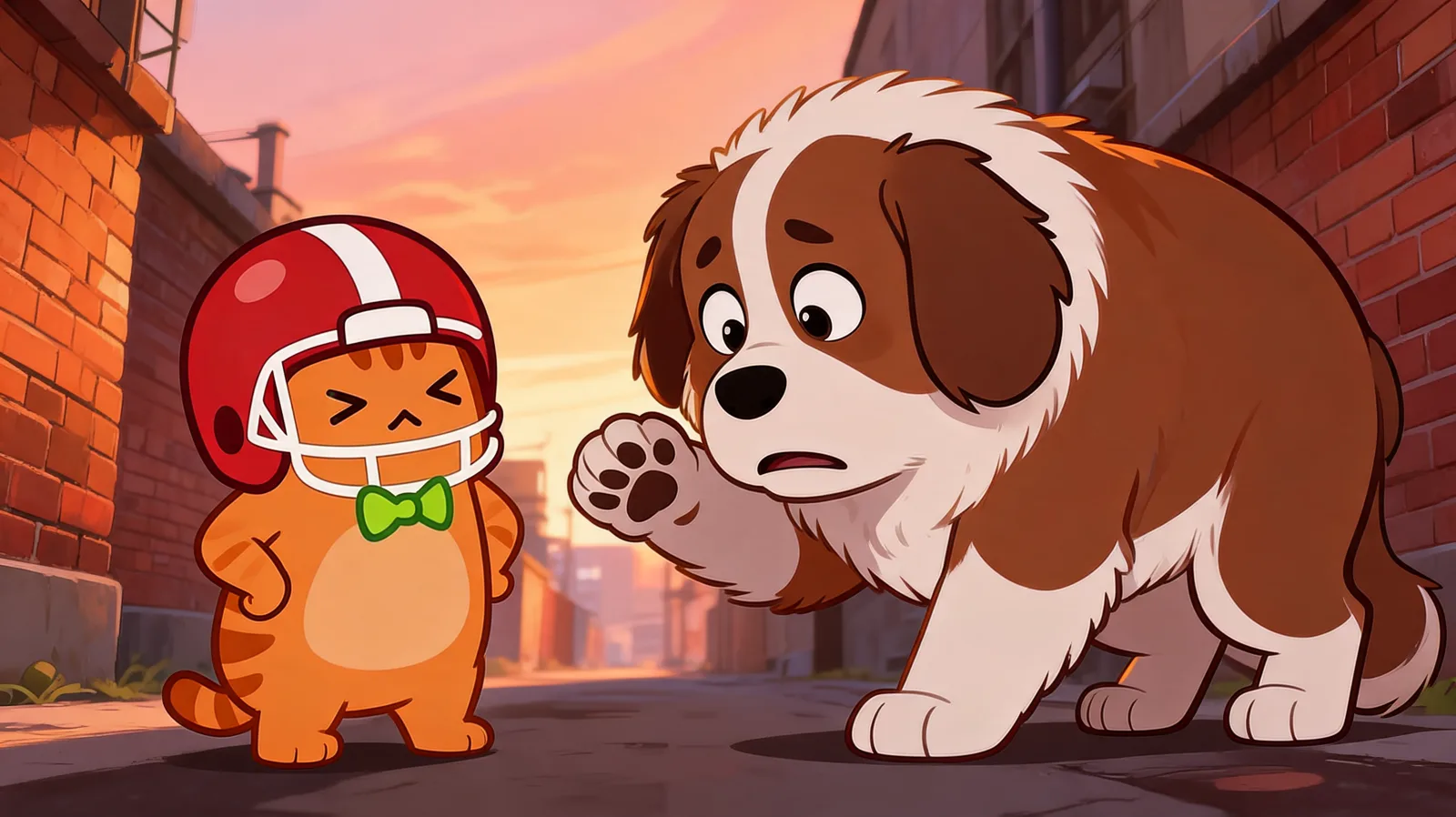
There's a clip that keeps showing up on YouTube and TikTok: a dog many times the size of a tiny cat slowly backs away, or bolts the second the cat hisses once. It's easy to laugh it off as "what is that dog even doing," but the pattern repeats for a reason. It comes down to five things.
Everyone assumes size decides who's in charge
The usual assumption is that bigger wins, but dogs and cats never actually share a ranking system to begin with — animal behaviorists generally agree that different species don't form dominance hierarchies with each other the way animals of the same species do. So "why would a huge dog back off" is really a question built on a rule that was never there.
The 5 real reasons
1. A hiss is a language dogs never learned
What's happening: when a cat arches its back and hisses, most dogs can't read that signal accurately. Why: dogs communicate rank through barking and growling, but a cat's hiss and puffed-up tail is a completely different grammar. Unfamiliar signals default to "threat" in a dog's head. What it looks like: one hiss, and the dog is already stepping back.
2. Close-range fights come down to body mechanics, not body weight
What's happening: cats have retractable claws and an extremely flexible spine, which gives them fast, unpredictable close-range reactions. Why: this isn't a shoving match, it's a fast swipe-and-retreat fight, and in that kind of exchange, reaction speed and a weapon (claws) matter more than raw weight. What it looks like: small dogs get pushed around by cats all the time for the same reason. A big dog has overwhelming strength on paper, but the cat rarely lets that strength come into play.
3. The risk of an eye injury doesn't care how big you are
What's happening: a claw catching near the eyes or nose can cause real damage. Why: even much larger animals tend to hold back when facing that kind of risk. It's not about size, it's generally considered an injury-avoidance instinct. What it looks like: a dog flinching or turning its head the moment a cat's paw comes up.
4. Temperament and socialization matter more than any rulebook
What's happening: two dogs of the same breed and size can react completely differently. Why: dogs known for a gentle temperament are often reported to avoid a confrontation rather than push back, even when a cat swipes first. A dog that never spent time around cats as a puppy, on the other hand, tends to either chase or get pushed around. What it looks like: within the same breed, one dog ignores the cat entirely while another gives it a wide berth.
5. Cats never signed up for "you have to win"
What's happening: cats evolved as solitary hunters, so they never needed to fall in line with a pack hierarchy. Why: protecting their own space and control matters more to a cat than making another animal submit. That alone makes a cat's refusal to back down something a dog wasn't expecting. What it looks like: a cat that doesn't run, just stares back, and the dog looks away first.
So who would actually win in a real fight?
The bigger the size gap, the more obvious the outcome. But it depends on the category.
- Weight: dogs win by a wide margin. A big dog and a cat aren't in the same weight class at all.
- Close-range reaction speed: cats win, thanks to retractable claws and a flexible spine.
- Hierarchy awareness: dogs are wired to respond to rank; cats barely register the concept.
- Tolerance for injury risk: dogs have a built-in instinct to protect their face, which offsets a lot of the size gap.
At similar sizes, the cat usually has the edge. Once the size gap gets big enough, the dog eventually wins on raw strength. Most dogs back off long before it gets to that point, though.
This isn't a universal rule
If you're reading this thinking "then why does my dog completely ignore the cat," fair point. These are tendencies, not laws. Breeds bred to chase small, fast-moving prey often don't back down from cats at all, and a dog raised alongside a cat from puppyhood usually doesn't care either way.
What's fun is that this exact "small but fearless wins" idea got turned into an actual game. In KickCat, an idle game, it's the cat wearing the helmet and kicking dogs around instead. The idle cat games where cats fight post covers that setup in more detail, and every dog breed that shows up is listed in the bestiary.
So what does this mean for you?
- If you already have a dog and a cat: a rocky relationship is usually about how they were introduced, not a size mismatch.
- If you're thinking about adding a second pet: look at that specific animal's temperament and socialization history before the breed's reputation.
- If you just clicked in out of curiosity: the next time you see one of these videos, it'll read less like "what is that dog doing" and more like "that's claw-risk avoidance."
FAQ
Is a cat actually a better fighter than a dog?
At a similar size, that's generally the case. Retractable claws and a flexible spine give cats faster close-range reactions. Once the size gap gets large enough, though, raw strength eventually wins out.
Is it safe to keep a dog and a cat together?
Yes, as long as the introduction is slow. How well the two get along tends to come down to each animal's individual temperament and socialization more than the species pairing itself.
Do cats ever get scared of dogs instead?
Yes, and it's actually more common. Dogs are bigger, bark loudly, and often move fast when chasing, which reads as a real threat to a cat that hasn't been socialized around dogs.